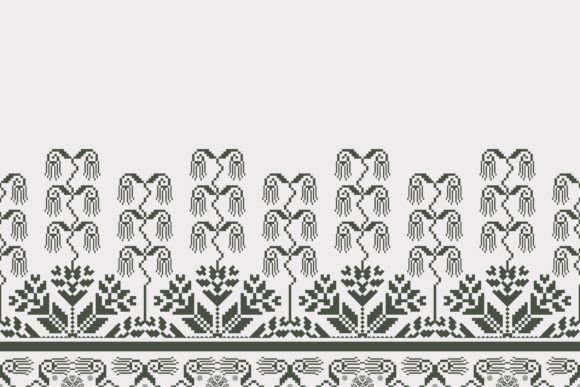
Ethnic Floral Embroidery Border Pattern Review
As a professional embroidery designer who has spent years translating digital concepts into tangible stitched goods, I approach every new machine embroidery design with a critical eye. My focus is never just on aesthetics; it is on viability for commercial production. Today, I am reviewing the Ethnic Floral Embroidery Border Pattern, a monochrome gray ethnic floral embroidery pattern described as a vector abstract ethnic floral embroidery geometric monochrome seamless pattern. For small business owners, apparel decorators, and Etsy sellers looking to elevate their brand identity, this specific digital embroidery file offers a unique opportunity to blend rustic charm with modern minimalism.
First Impressions: A Versatile Graphic Asset
When I first opened the Graphics file for the Ethnic Floral Embroidery Border Pattern, the immediate impression was one of sophisticated restraint. The description highlights a "monochrome gray" palette, which instantly signals versatility. In the world of small business merch, color can be polarizing, but a grayscale geometric motif is universally adaptable. It feels professional yet retains a handmade, artisanal soul. This design does not scream for attention like a neon logo; instead, it whispers quality. It fits perfectly into the aesthetic of boutique cafes, florists, and creative studios that value visual consistency without overwhelming the customer.
The seamless nature of the pattern is particularly noteworthy. As a designer, I appreciate when a Patterns category asset allows for repetition without awkward breaks. This means the Ethnic Floral Embroidery Border Pattern can be extended along a table runner or wrapped around a tote bag handle without losing its structural integrity. The abstract geometric elements within the floral motifs suggest a modern twist on traditional folk art, making it suitable for both heritage brands and contemporary lifestyle labels.
Real-World Applications for Branded Merchandise
The true test of any embroidery file lies in its application across various substrates. Here is how I envision the Ethnic Floral Embroidery Border Pattern performing in real-world business scenarios:
- Staff Uniforms and Aprons: For a bakery or a boutique, adding this border to the hem of an apron or the cuff of a chef's jacket creates a subtle brand signature. It elevates the staff's appearance from generic to curated. The apron embroidery would look especially striking if placed on a dark fabric, using a lighter gray thread to create depth.
- Custom Apparel and Tote Bags: A tote bag design featuring this border running vertically down the side or horizontally across the top adds instant structure. Unlike large logos that might crack or fade over time, this linear pattern integrates beautifully with the fabric weave, ensuring longevity for your customers.
- Cap Embroidery: While caps require careful planning, this border could serve as an excellent accent on the brim or the back strap of a baseball cap. It avoids the clutter often seen on front panels while still reinforcing brand recognition.
- Product Packaging and Labels: Even beyond clothing, this pattern works wonders on woven hang tags or as a printed accent on product packaging. It signals to the buyer that the contents are premium and thoughtfully designed.
Critical Considerations for Production
While the Ethnic Floral Embroidery Border Pattern is visually appealing, a professional review must address potential pitfalls. Not every design translates perfectly to every scale or material. Before committing to a full run of commercial embroidery, you must evaluate the following factors:
Stitch Density and Fabric Texture
The description notes this is a "vector abstract" design. Vector files are great for scaling, but embroidery is physical. If the stitch density is too high, the design may pucker delicate fabrics like linen or silk, which are common in handmade products. Conversely, if the density is too low, the gray thread might show through the backing, creating a muddy appearance. Always test the design on a scrap piece of your actual fabric texture first.
Size Limitations and Detail Retention
This pattern is intended as a border. If you attempt to shrink it significantly for a tiny embroidered patch or a small chest logo, the intricate geometric details may blur together. Small patch sizes require simplified designs. Ensure the smallest repeating element remains distinct at your target size. Similarly, on curved surfaces like the crown of a cap, straight borders can distort. You may need to adjust the curve radius in your digitizing software to ensure the flow remains natural.
Color Contrast and Thread Selection
The "monochrome gray" aspect is a double-edged sword. On a light shirt, a light gray thread might disappear entirely. You must carefully select your thread colors to ensure contrast against the base garment. Sometimes, mixing two shades of gray or adding a single pop of color (like a deep charcoal) can enhance the dimensionality of the finished product. Do not assume the default gray will work on all backgrounds.
Impact on Brand Identity and Customer Trust
For small business owners, every stitch counts toward your reputation. Using a cohesive design like the Ethnic Floral Embroidery Border Pattern across your custom apparel and merchandise creates a sense of unity. When a customer sees the same elegant border on your tote bags, your staff uniforms, and your event merch, it builds customer trust and reinforces your brand story.
This pattern suggests a brand that values craftsmanship and attention to detail. It moves away from the "slapped-on logo" look and embraces a more integrated, textile-focused approach. This is crucial for handmade brands and Etsy sellers who compete on quality and uniqueness. By using this design assets effectively, you signal to your buyers that your products are durable, stylish, and professionally produced.
Practical Designer Notes for Implementation
To get the best results from the Ethnic Floral Embroidery Border Pattern, follow these steps before mass production:
- Test in Black and White First: Digitize a small section in black thread on white fabric to check the flow and spacing without color distractions.
- Verify Hoop Size: Confirm the total length of the repeat fits within your machine's maximum hoop size. If it requires jumping hoops, ensure the alignment is precise to avoid visible gaps.
- Select the Right Stabilizer: Given the geometric nature, use a tear-away or cut-away stabilizer appropriate for your fabric weight to prevent shifting during stitching.
- Create a Printable Mockup: Generate a printable mockup showing the pattern on your actual products. Show this to clients or stakeholders for approval before cutting any thread.
- Check Licensing: Always confirm commercial licensing terms. Ensure you have the right to use this digital embroidery file for unlimited small business merch sales.
- Compare with Other Assets: Place the design beside your existing logos and other design assets to ensure visual harmony across your entire product line.
In conclusion, the Ethnic Floral Embroidery Border Pattern is a strong contender for businesses seeking a refined, versatile aesthetic. With proper testing and thoughtful application, it can transform simple garments into branded experiences that resonate with customers. Whether for a local café's aprons or a global brand's tote collection, this pattern offers the perfect balance of tradition and modern utility.